What Is Carried
They say you can always tell who carries the moon by the way they walk. Careful, as if balancing something that might slip away if named too loudly.
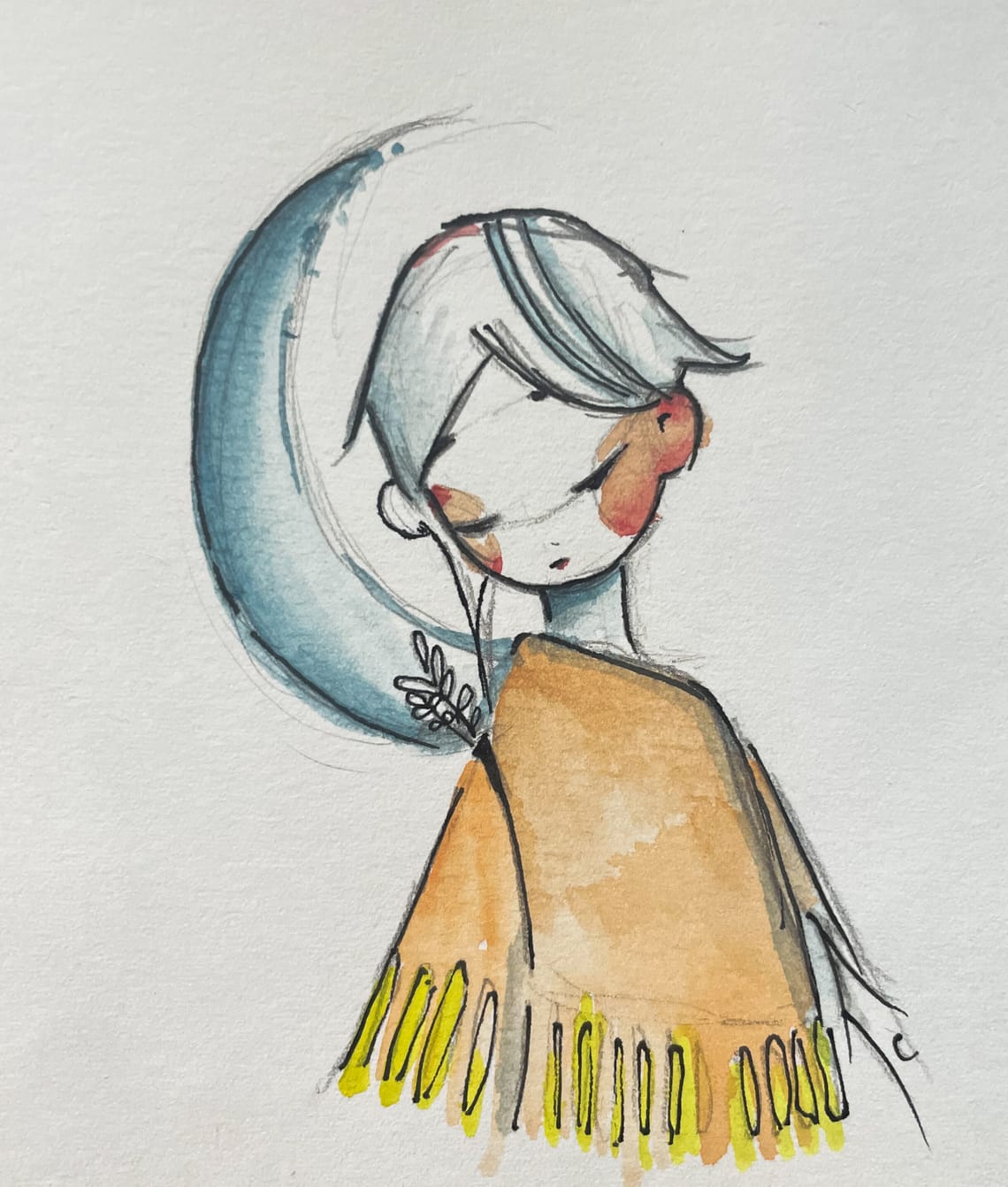
The child did not remember when the crescent first appeared. Only that one morning it was there, curved against their back like a question that had chosen them as its answer. It was cool and blue and impossibly light, yet it followed with the patience of something ancient.
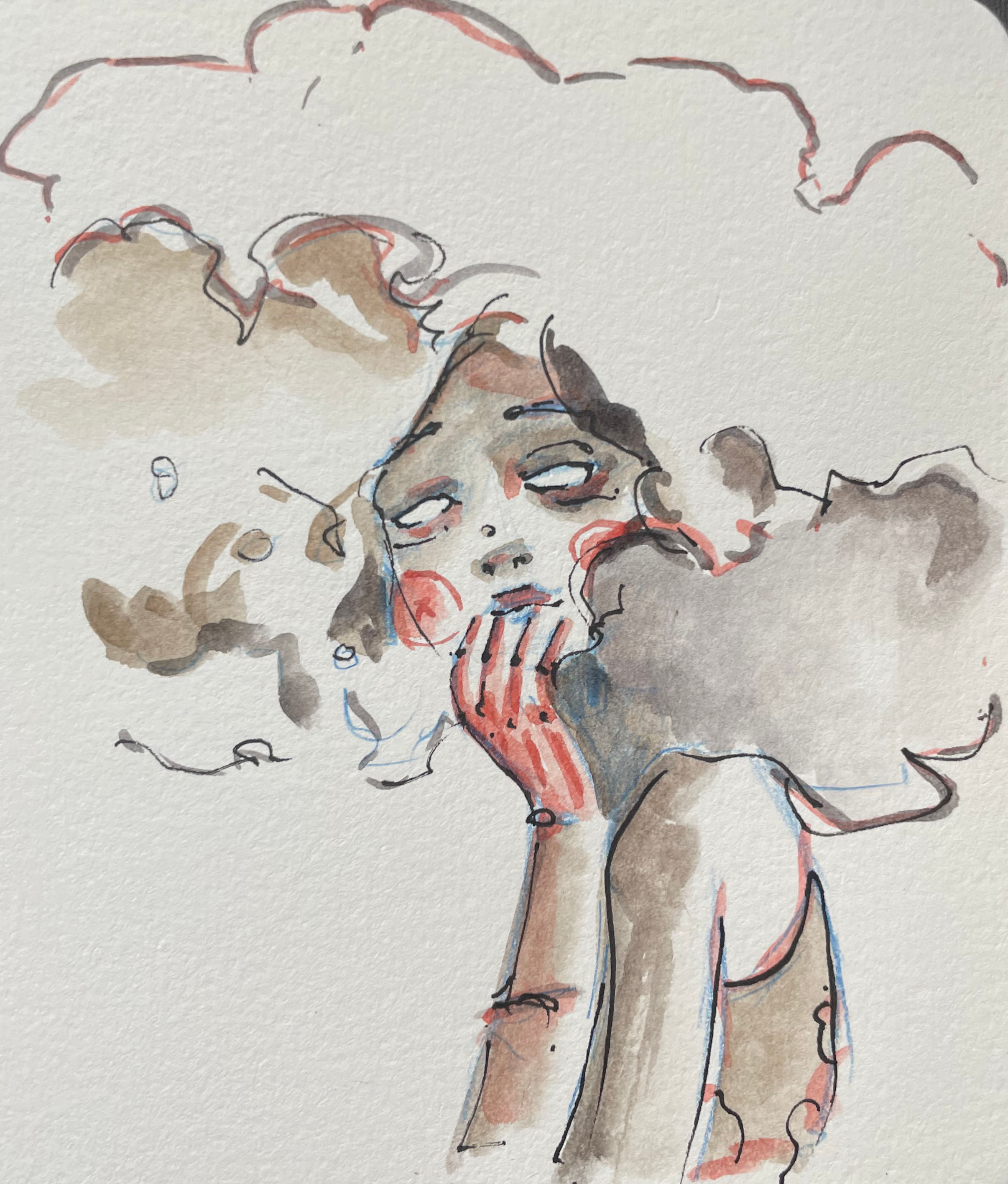
They learned quickly not to look at it directly. Looking invited explanations, and explanations made the crescent heavy.
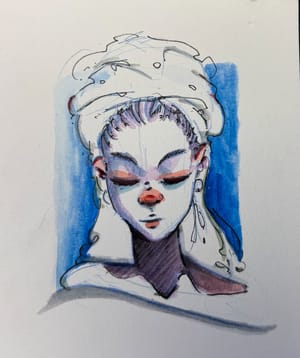
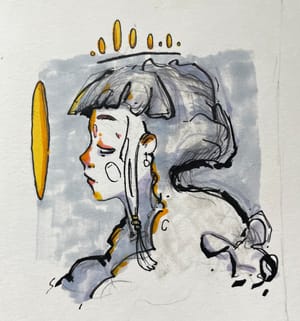
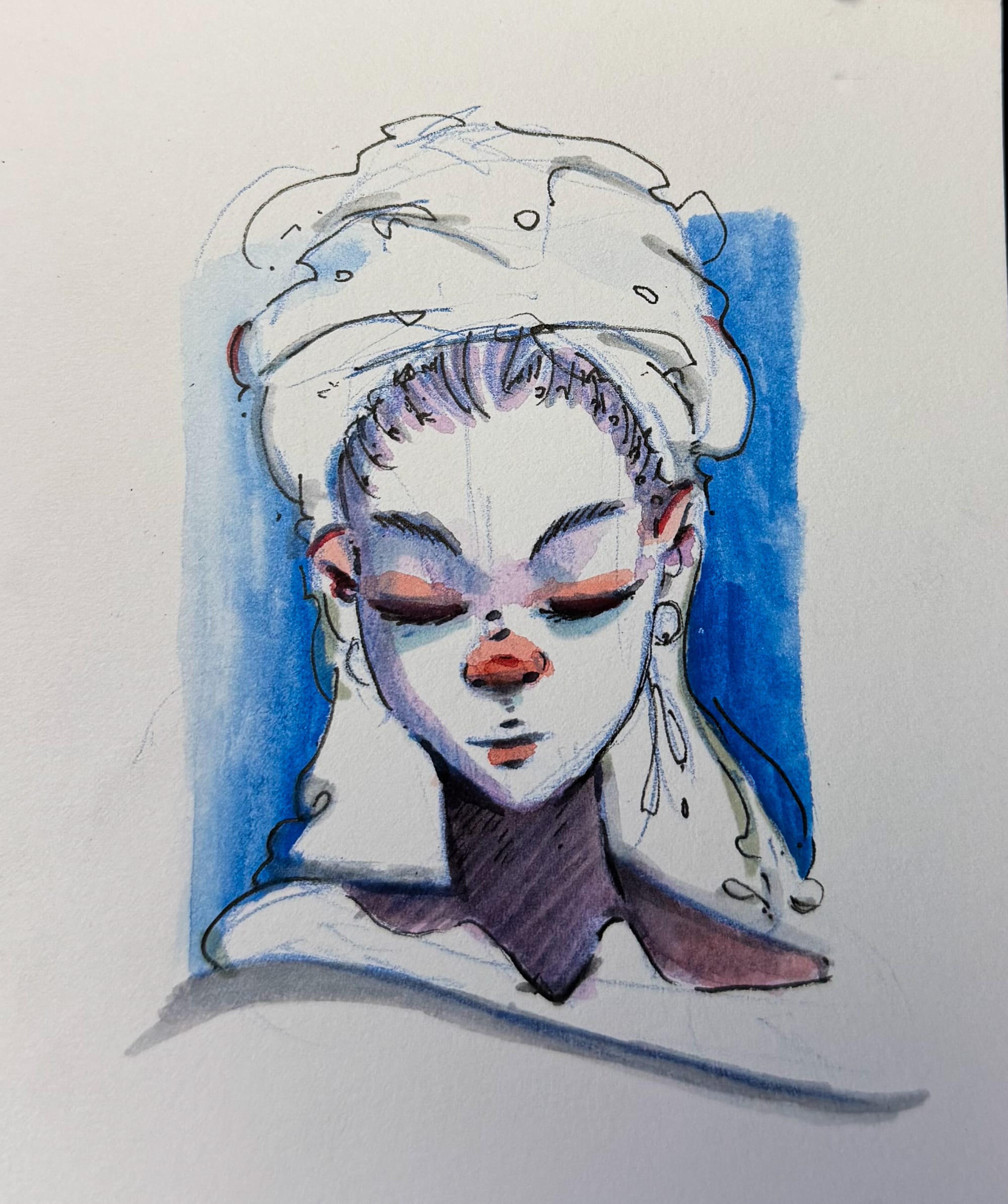
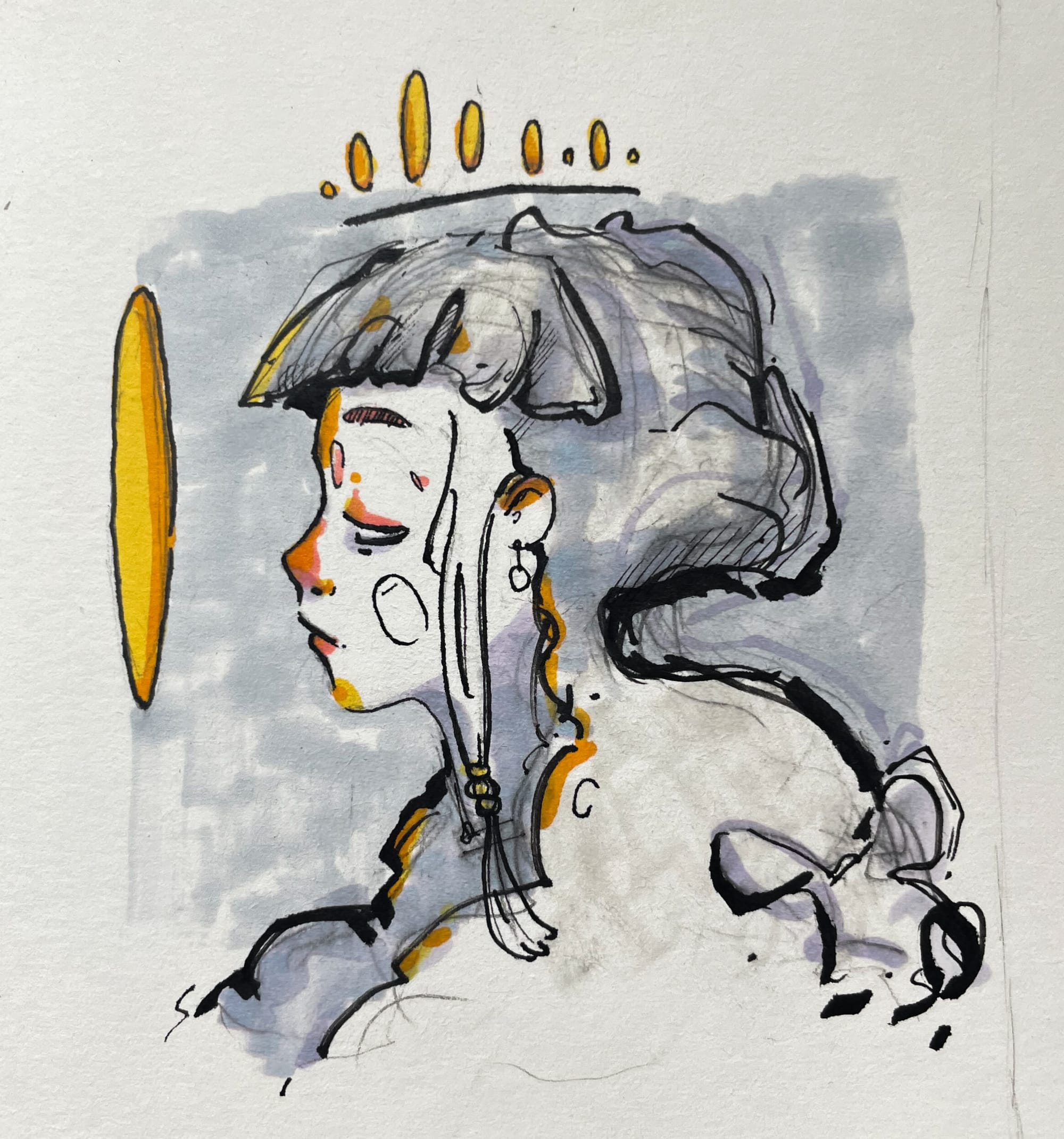
Instead, they moved forward with their eyes closed, face warmed by sun and wind, marked in small, honest colors. The world left its fingerprints on them: rust from the earth, gold from late afternoons, the soft ache of distance traveled on foot. None of it hurt. All of it stayed.
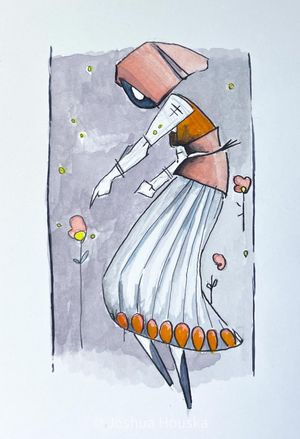
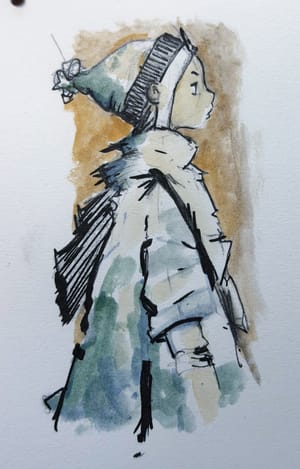
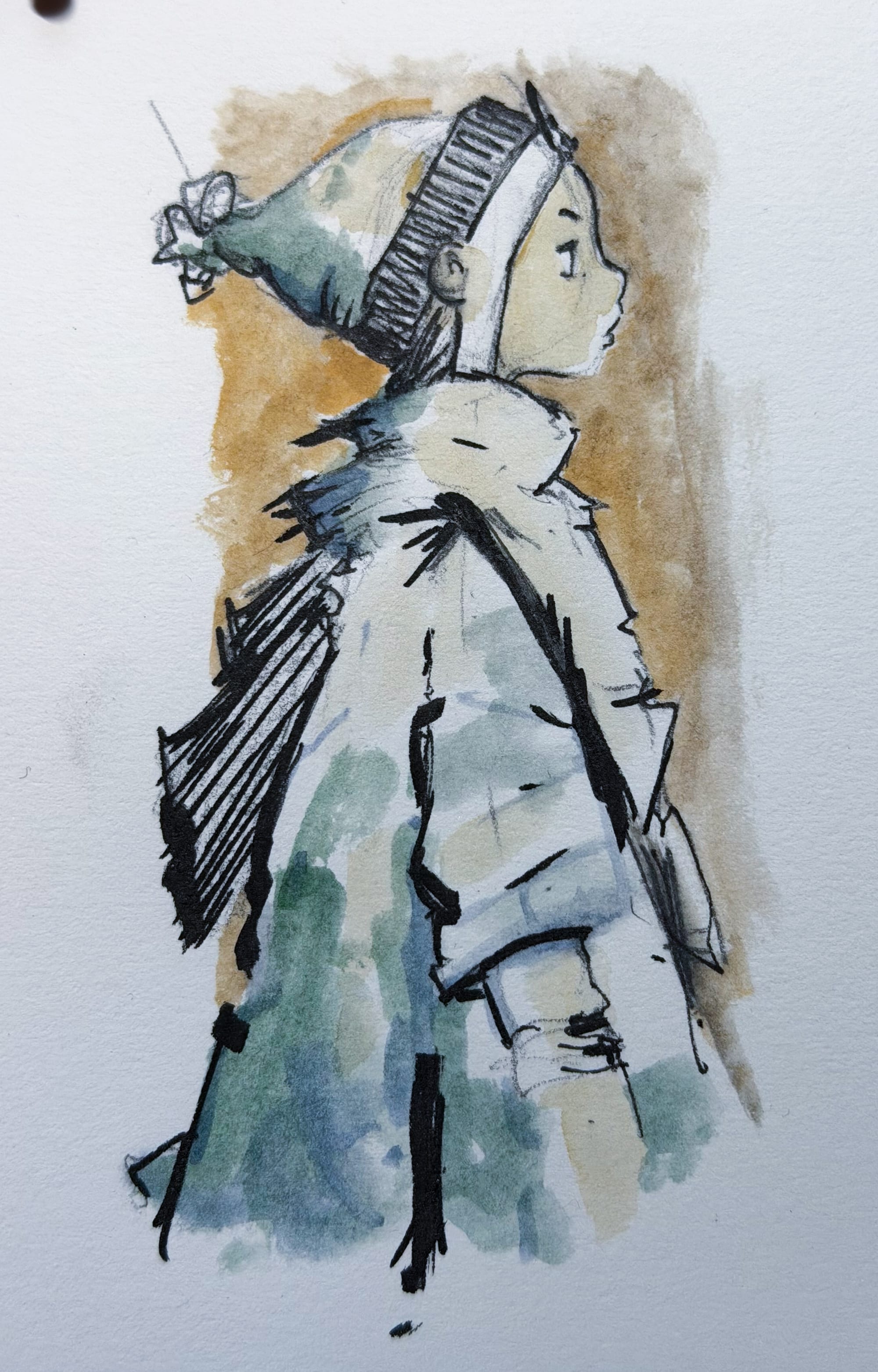
The garment they wore was practical. Ochre and worn thin at the edges, fringed like tall grass after a long season. It moved when they moved. It rested when they rested. Sometimes, when the road was quiet, the fringe whispered stories of animals that ran without needing to arrive.
When the nights grew long, the child held the crescent close, not as a shield but as a companion. It did not promise direction. It did not glow brighter when asked. It simply curved, steady and faithful, reminding them that cycles do not require witnesses to continue.
They never asked where they were going. That was not the point.
Some things are not meant to be followed.
Some things are meant to be carried.